International Cuisine: The Influence of Diverse Cultures on the Creation of New Dishes
Culinary Traditions Interwoven
The world of international cuisine is a vibrant tapestry woven from the threads of diverse cultures. As people migrate and interact, their culinary traditions meld, leading to the creation of exciting new dishes that reflect a fusion of flavors, techniques, and ingredients. The interplay between different culinary styles creates an ever-evolving landscape where traditional dishes adapt to new influences while simultaneously maintaining their roots.
This phenomenon is vividly illustrated by food innovations that arise from cultural exchanges across the globe. For instance, one can explore the origins of Taco al Pastor, a prominent dish in Mexico that showcases how Lebanese shawarma has influenced Mexican cooking. The method of marinating pork in a blend of spices and serving it on corn tortillas with pineapple has led to a delicious fusion that is now beloved by many and frequently enjoyed at taquerías across the United States.
Another notable example is the California Roll, a sushi variant that originated in California. This dish typically features avocado, imitation crab, and cucumber, offering a milder flavor profile that caters to the American palate. Its popularity has significantly contributed to the sushi boom in the U.S., changing how many Americans perceive Japanese cuisine and embracing the concept of sushi beyond traditional forms.
Butter Chicken, a hallmark of Indian cuisine, further highlights the collaboration of culinary influences. This rich, creamy dish combines aromatic spices indigenous to the Indian subcontinent, yet it has been adapted to appeal to Western tastes. Its widespread recognition in restaurants across the U.S. shows how dishes can transcend their origins while still telling a story of their cultural heritage.
Food serves not only to nourish our bodies but also as a powerful bridge between cultures, fostering understanding and appreciation. Several key factors contribute to this ongoing culinary evolution:
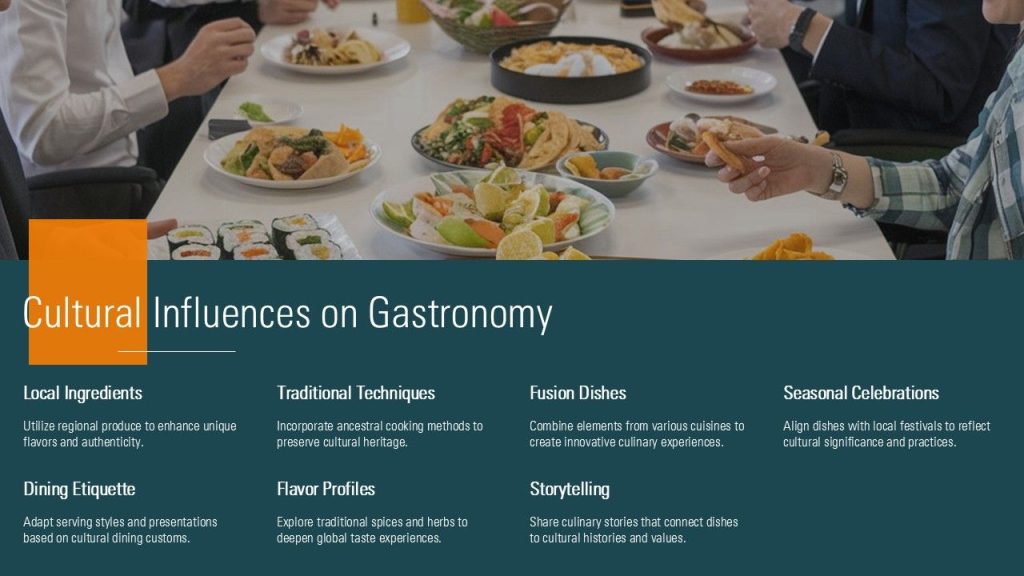
- Migration: People carrying their culinary traditions to new lands often adapt their recipes, leading to exciting variations that reflect local tastes and available ingredients.
- Globalization: Ingredients and recipes have spread throughout the world via trade routes, technology, and communication, making it possible for nearly every cuisine to be explored globally.
- Social Media: Influencers and food bloggers showcase fusion foods, creating trends and sparking curiosity which encourages others to experiment with diverse flavors.
The exploration of international cuisine invites food enthusiasts to embark on a journey of discovery that unveils how diverse cultures continually reshape our dining experiences and culinary landscape. With each bite, we not only enjoy a meal but also a rich narrative of human interaction and creativity. Are you ready to explore the extraordinary flavors of the world?
DIVE DEEPER: Click here to discover how to incorporate local and organic ingredients into your dishes</a
The Culinary Melting Pot: Migration and Innovation
The exchange of culinary traditions across borders is a phenomenon deeply rooted in human history. From ancient trade routes to modern urban centers, migration has played a pivotal role in transforming local cuisines into a vibrant amalgamation of flavors and techniques. Each culture brings its unique ingredients and cooking methods, which, when introduced to new environments, can spark an unprecedented wave of culinary creativity.
For example, the arrival of Italian immigrants in the United States during the late 19th and early 20th centuries paved the way for pizza to evolve beyond its Neapolitan roots. In places like New York and Chicago, local ingredients and innovative styles led to the creation of distinct variants such as the deep-dish pizza, which has garnered a dedicated following. This adaptation not only showcases how traditional recipes can evolve but also how they resonate with the tastes of a new audience.
In addition to migration, urbanization has significantly influenced the growth of international cuisine. Major cities often serve as melting pots where various culinary cultures meet. Take Los Angeles, for example, where food trucks offer a range of dishes that blend Mexican, Korean, and even vegan influences. The Korean Taco, a tantalizing mash-up of Mexican and Korean flavors, exemplifies this phenomenon. Filled with marinated meat, kimchi, and salsa, it has become a symbol of the innovative spirit thriving within multicultural hubs.
Another component driving the evolution of dishes is the availability of ingredients that arise from globalization. Today, staples like quinoa, turmeric, and sriracha are commonplace in American kitchens, reflecting a growing interest in health and flavor. The incorporation of these ingredients into traditional American dishes results in innovative culinary creations, such as a spicy quinoa salad or turmeric-infused chicken, showcasing how global influences can lead to exciting new health-conscious options.
As international cuisine continues to gain popularity, several key trends emerge that underscore its significance:
- Food Fusion: The deliberate combination of culinary techniques and ingredients from different regions often results in unique creations, sparking curiosity and prompting taste adventures.
- Cultural Storytelling: Each dish tells a story, offering patrons a glimpse into the rich history and traditions that shape a community’s identity, while inviting them to partake in the dialogue.
- Ingredient Innovation: Chefs are increasingly experimenting with locally sourced alternatives to traditional ingredients, resulting in an evolving menu that captures regional flavors while paying homage to global influences.
Exploring international cuisine reveals a dynamic narrative of how cultures interweave through food. By embracing diverse culinary influences, we redefine our dining experiences, embarking on an adventure that invites palate expansion and cultural appreciation. The next time you savor a dish inspired by far-off lands, reflect on the rich history and the diverse backgrounds that have come together to create that moment on your plate.
| Culinary Fusion | Key Aspects |
|---|---|
| Creative Collaboration | Brings together chefs from various backgrounds, encouraging innovation and exchanges of techniques. |
| Diverse Ingredients | Allows the use of unique flavors and products endemic to different cultures, enhancing the dining experience. |
The modern culinary landscape thrives on fusion cuisine, where chefs merge culinary traditions and techniques, creating exciting new dishes that reflect a harmonious blend of flavors and cultural backgrounds. For example, the popularization of dishes like sushi burritos or Korean tacos showcases the delicious outcomes of this collaboration, appealing to adventurous eaters seeking new experiences. Moreover, the exploration of global cuisines not only increases cultural awareness among diners but also elevates the gastronomic scene as restaurants continually seek innovative ways to entice customers. The integration of distinct ingredients can lead to the emergence of flavors never before tasted, pushing the boundaries of what defines cuisine.As the world embraces the beauty of diversity, the culinary arts reflect this evolution, inviting all to explore, appreciate, and savor the rich tapestries woven through international dishes.
DISCOVER MORE: Click here to enhance your creative writing skills
Global Ingredients: The Power of Culinary Diversity
The ascent of international cuisine can also be attributed to the rise of culinary globalization, where chefs source ingredients from around the world to elevate their dishes and create exquisite flavors. This expanded accessibility to diverse products not only enhances traditional recipes but also empowers chefs to craft innovative dishes that embody a cohesive blend of cultures. The modern kitchen resembles a global marketplace, alive with ingredients that merger flavors once thought only to exist in distant lands.
Consider the popularity of fusion cuisine, where chefs seamlessly blend elements from different culinary traditions. A perfect case is the California Roll, a sushi variant that debuted in the U.S. during the 1970s. Combining traditional Japanese sushi techniques with local American tastes, this dish substitutes raw fish for avocado and crab, appealing to more conservative palates. Today, the California Roll exemplifies how local preferences and ingredients can shape staple dishes, emerging as an exemplar of culinary evolution.
Moreover, the increase in food supply chains and the ability to import exotic ingredients has led to the construction of entirely new cuisines. For instance, the rise of Asian fusion restaurants in America highlights this evolution, where pad Thai meets taco shells, and pho is served in burrito form. These novel takes on traditional dishes bridge cultural gaps while making international flavors more accessible to a wider audience. Chefs explore these avenues to not only cater to local tastes but to also foster an understanding of different cultural culinary practices.
Addressing the introduction of global ingredients further opens the dialogue about food sustainability. As chefs bring in international products, there is an increasing movement to connect these culinary traditions with locally-sourced options. Many restaurants are now highlighting dishes that incorporate local produce while still adhering to original flavors, showcasing dishes like farm-to-table ramen where local vegetables accompany traditional noodles and broth. This approach not only supports local farmers but also fosters a deeper connection to the community and its food culture.
To understand the significance of this culinary exchange, we can look at the increasing demand for plant-based diets. The interest in vegan and vegetarian dishes has paved the way for chefs to adapt diverse cultural meals to meet these dietary preferences. Middle Eastern staples like falafel and hummus have garnered popularity and now frequently appear on menus supporting the plant-based trend. Meanwhile, the Moroccan tagine, traditionally made with meat, is being reimagined with seasonal vegetables and grains, highlighting the vegan culinary revolution that enhances international flavors.
Additionally, the influence of food media—television shows, blogs, and social media platforms—has accelerated the popularity of international dishes. As chefs and food enthusiasts share their culinary innovations, there is an increasing appetite for dishes that tell stories and celebrate cultural diversity. Documentaries and cooking shows explore the journeys of different cuisines, shedding light on their historical significance and inspiring home cooks to experiment with flavors that remind them of their roots or expose them to exciting new culinary adventures.
This proliferation of international cuisine invites an exploration beyond the plate, urging diners to appreciate the rich tapestry of cultures each dish embodies. With each bite, diners engage in a dialogue that reflects not only culinary evolution but also the stories, traditions, and histories that inspire the creation of new dishes. As food continues to bridge cultural divides, the realm of international cuisine remains ripe for exploration and adventure, constantly evolving with each shared meal.
DISCOVER MORE: Click here to learn how to use local and organic ingredients
Conclusion: A Culinary Tapestry of Global Influence
In closing, the realm of international cuisine stands as a testament to the richness and diversity of our global culinary landscape. As chefs continue to experiment with ingredients, techniques, and traditions from various cultures, they not only innovate but also forge connections that transcend borders. The rise of fusion dishes, such as the California Roll and Asian tacos, highlights how local tastes and international flavors can coexist, creating a vibrant tapestry that reflects our shared human experience.
The growing fascination with plant-based diets and sustainability further emphasizes the ongoing evolution of cuisine, prompting chefs to explore traditional dishes while incorporating local and seasonal ingredients. This melding of influences not only honors culinary heritage but also fosters a deeper commitment to community and ecological awareness. As diners demand more diverse options, the potential for creativity in the kitchen is boundless, driving the culinary scene toward greater inclusivity and innovation.
Moreover, the role of food media cannot be underestimated in shaping today’s culinary trends. Through engaging content, chefs and food enthusiasts bring stories of cultural exchange to life, inviting audiences to appreciate the origins and significance behind each dish. This encourages a greater understanding of culinary practices worldwide and inspires a new generation of home cooks eager to explore international flavors.
Ultimately, as international cuisine continues to flourish, it invites all of us to embark on a journey of discovery—one where each meal serves as a bridge between cultures, fostering admiration, respect, and a deeper appreciation for the diverse world we inhabit. Every bite not only tells a story but cultivates a sense of unity that challenges us to embrace the vibrancy of culinary diversity in our own plates.